
Whether it’s Connor McDavid, Nathan MacKinnon or Quinn Hughes, no NHL player is perfect. Not even Sidney Crosby.
It’s impossible to be flawless in every aspect of the game. That’s not to say that a weak point in a player’s game can consistently be exploited by other teams or that they can’t be so effective elsewhere in their game that the weakness isn’t an issue.
When it comes to NHL draft prospects, it’s almost easy to spot the areas of their game that could use some improvement. They are 17- and 18-year-old kids, after all. There is still so much room for growth physically, mentally and tactically for each player who will be drafted this June.
Let’s look at the top prospects for this year’s NHL draft and what parts of their game need improvement.
Top 10 NHL draft players
1. Frolunda (Sweden) left wing Ivar Stenberg
Sweden’s star prospect has been on the rise for much of the season. Scouts have adored his well-rounded game while driving Sweden to a world juniors gold medal and thriving at the country’s men’s level. The big question that’s come up at times is whether Stenberg’s raw skill level is high enough to continue producing at this level when he comes to North America.
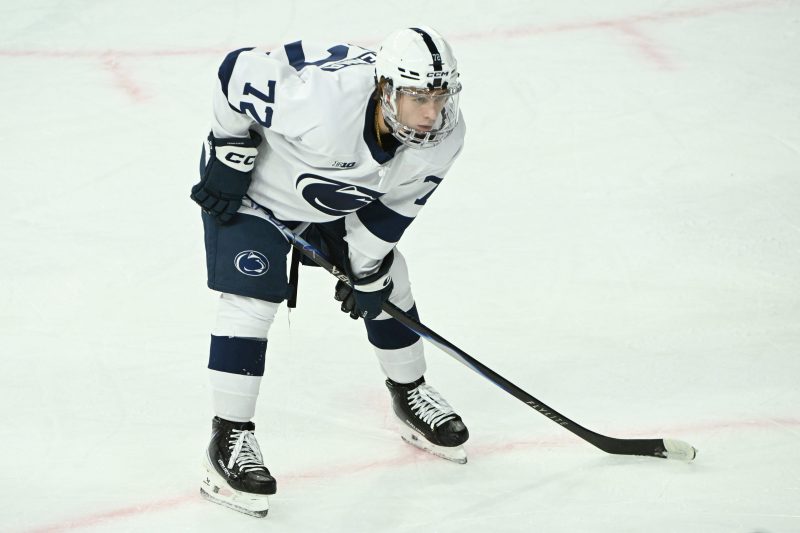
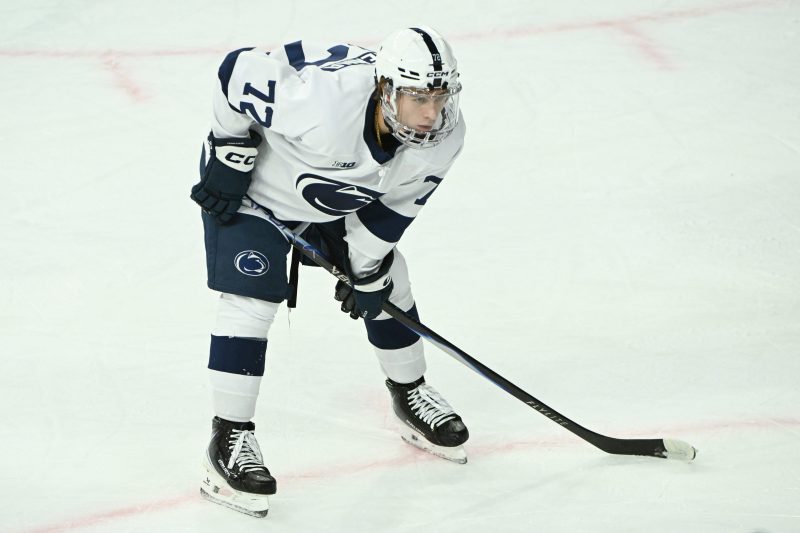
2. Penn State (NCAA) left wing Gavin McKenna
Undoubtedly the most skilled player in the NHL draft, McKenna is an offensive dynamo. The issue almost mirrors Stenberg. While the top-end skill and creativity are there, his game needs plenty of rounding out, with the most glaring area being his defense. McKenna coasts by on his production, which has allowed him to become disengaged defensively. When he does put in an effort, he has shown the ability to make the play. He just needs to commit to playing that way.
3. Boston University (NCAA) center Tynan Lawrence
Simply put, Lawrence’s biggest question is whether he can find his groove at the NCAA level. There is only a month left of college hockey, and most teams won’t even get the chance to play that long. Lawrence has been better as of late, but the questions of whether he is strong enough or has the tactical maturity to excel in the NCAA have been glaring since he stepped into college hockey this season.
4. North Dakota (NCAA) defenseman Keaton Verhoeff
Verhoeff has gotten praise for his excellence as a passer, intelligence as a defender and his fairly solid overall game. One major question about Verhoeff’s game has been his quickness and first few steps when trying to escape. He knows how to maneuver his way out of trouble when dealing with the forecheck. Verhoeff doesn’t quite have the elite-level mobility typical of top-end draft talents.
5. Munich (Germany) defenseman Alberts Smits
The Latvian defender, who was playing big minutes in Finland, has moved to Germany to finish his draft-eligible season. Smits has played at the World Junior Championship, the Olympics, the Liiga and now the DEL. The biggest question is whether his daring offensive play will continue to work as he plays better competition and whether it starts to affect his defensive game negatively. Smits will play important minutes for a team looking to challenge for a league title.
6. Djurgarden (Sweden) center Viggo Bjorck
Bjorck proved he could play center in a big role at the world juniors for Sweden. He’s continued to play as a top-six center in the Swedish League. Whether he can play center isn’t a question at this point; what is a question is whether he has the physical strength to do it when going face-to-face with the best talent in the world. He will have to spend plenty of time in the gym every off-season from here on out.
7. HV71 (Sweden) defenseman Malte Gustafsson
When you step up from the junior game to the men’s league, you usually don’t get better. That’s exactly what’s happened with Gustafsson, though. He is playing more physically, engaging in battles with the same excellent stick work but using his frame much more effectively. His skating and puck-moving on the breakout remain strong, and he looks like an all-around effective blueliner. The biggest question is whether he has the offensive tools to stay effective at the next level.
8. Vancouver (WHL) left wing Mathis Preston
Despite Preston’s high level of skill and mobility, this season hasn’t been what he had hoped. His 35 points in 38 games are fine but below expectations. When the Vancouver Giants acquired him for a fresh start, Preston suffered an injury in his second game with the club. His size is an issue for some, but Preston must answer questions about his processing if and when he returns to the ice this season.
9. Tappara (Finland) center Oliver Suvanto
There is little doubt that Suvanto is a future NHL center. His 200-foot game is quite refined, and he understands how to play within a pro system. The question will be about his offensive upside and skill. He flashes some great hands from time to time, and he can get moving when given the runway, but he won’t get the time and space he’s accustomed to in Finland when he moves to North America.
10. Blainville-Boisbriand (QMJHL) defenseman Xavier Villeneuve
There will be questions about Villeneuve’s defensive game until the day he enters the NHL and answers them once and for all. Will the undersized defender make his mark with the puck when the game gets faster and more physical? Will he be able to hold his own defensively to make his offensive game worth it? Villeneuve is the biggest swing for any defender in the NHL draft class because of the variety of questions that surround his game.